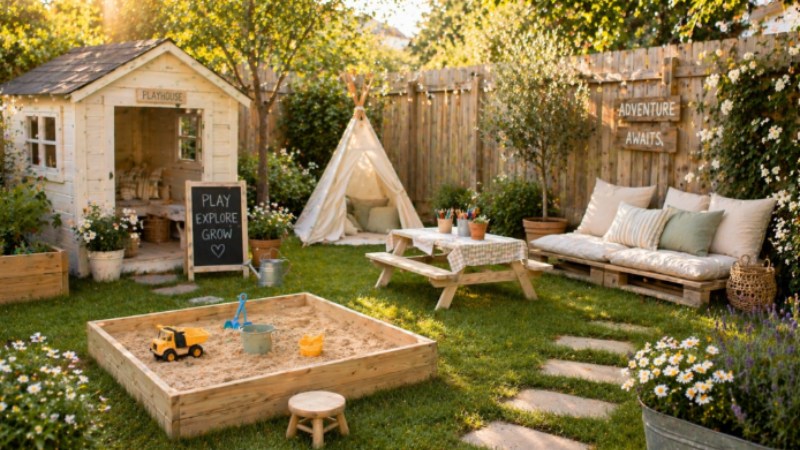
A backyard can become much more than a patch of grass behind the house. With a few thoughtful changes, it can turn into a place where children move, parents relax, and everyone spends more time together. The best family backyard ideas do not require a large budget or a professionally designed landscape. They begin with understanding how your household wants to use the space.
Some families need room for active play, while others prefer quiet corners for reading, planting, or weekend meals. A well-planned yard can support several needs at once. It can encourage kids outdoor activities, improve daily routines, and create safe outdoor spaces where children can explore with confidence. The goal is not to fill every corner. It is to build a flexible setting that feels comfortable, useful, and easy to maintain.
Plan Activity Zones Around Real Family Life
Before buying furniture or starting construction, divide the yard into simple zones. This prevents the area from feeling crowded and allows different activities to happen at the same time.
A practical layout may include:
- An open area for running, ball games, or exercise
- A shaded place for adults and younger children
- A small planting section
- A table for crafts, snacks, or homework
- A quiet corner for reading and resting
You do not need walls or permanent dividers. Planters, benches, outdoor rugs, and stepping stones can create clear boundaries. Keep the centre open for games, place a table under shade, and reserve one edge for backyard gardening. Planning around real habits is more useful than copying a decorative design.
Create Safe Outdoor Spaces for Everyday Use
Safety should guide every backyard decision, especially when young children use the area. Check the ground for holes, exposed roots, loose paving, sharp edges, and slippery surfaces. Secure heavy furniture and place climbing equipment over grass, mulch, sand, or another softer surface.
Store chemicals, cutting tools, fertilisers, and gardening equipment in locked or elevated storage. Gates should close securely, while ponds, pools, and fire features need proper barriers and adult supervision.
Shade also matters. A large umbrella, pergola, shade sail, or mature tree can make summer play more comfortable. Place adult seating where the main play area remains visible.
Solar lights can brighten paths, steps, and garden edges in the evening. A brief safety inspection every few weeks can catch small problems before they cause an accident.
Choose Kids Outdoor Activities That Can Change
Children often lose interest in equipment that supports only one type of play. Flexible items offer better long-term value because they can be used in different ways as children grow.
Useful options include:
- Chalkboards or washable outdoor boards
- Lightweight cones for races and obstacle courses
- Buckets, scoops, and water tubs
- Portable goals or hoops
- Outdoor building blocks
- A weather-resistant craft table
- Low balance beams or stepping logs
A set of cones can become a racecourse one day and football markers the next. The most memorable kids outdoor activities often come from simple materials that let children invent their own games.
Make Backyard Gardening a Shared Habit
A small garden gives children a practical way to learn about food, weather, patience, and responsibility. Backyard gardening can work in a large lawn, a narrow side yard, or a few containers on a patio.
Begin with plants that grow quickly and show visible progress. Herbs, beans, tomatoes, lettuce, strawberries, and sunflowers are usually exciting choices for children.
Give each child a task suited to their age. Younger children can water pots or collect fallen leaves. Older children can read seed instructions, measure growth, or help make compost.
Raised beds and containers are easy to manage and separate plants from play areas. Add labels with the plant name and date. The garden does not need perfect rows because small mistakes are part of the learning experience.
Complete Outdoor Family Projects Together
Shared projects make the yard feel personal and teach children how useful spaces are created through planning and teamwork.
Simple outdoor family projects include:
- Painting plant pots
- Building a bird feeder
- Creating stepping stones
- Making a bug hotel
- Designing a small fairy garden
- Building a basic bench
- Labelling herbs and vegetables
Choose projects that can be finished in short stages. A bird feeder, for example, can involve choosing materials, decorating it, and observing visiting birds.
When gathering planters, storage, tools, or materials, families can compare practical backyard improvement products based on the size, safety needs, and purpose of the project.
Add Comfort for Adults and Children
A family-friendly backyard should not focus only on children. Adults also need a reason to stay outside. Comfortable seating, shade, and easy access to drinks or snacks can turn a short play session into a relaxed afternoon.
A bench works well for supervision, while outdoor cushions or low chairs create a reading area. A small table can support meals, games, crafts, and homework. Choose washable fabrics and lightweight, weather-resistant furniture.
This type of family home improvement often matters more than decorative upgrades. When adults feel comfortable outside, children usually spend more time there too.
Include Nature and Quiet Time
Not every outdoor activity needs to be energetic. Children also benefit from a calm place where they can read, draw, observe insects, or simply rest.
A quiet corner might include:
- A small shaded bench
- Bird-friendly plants
- A basket of outdoor books
- Smooth stones for stacking
- Wind chimes
- A small drawing table
These features offer a break from screens and structured activities. Family backyard ideas work best when they balance active play with quiet experiences for different ages and moods.
Use Simple Storage to Reduce Clutter
Outdoor play becomes frustrating when toys, tools, and cushions have no proper place. Good storage makes cleaning easier and reduces tripping hazards.
Use labelled bins for balls, chalk, gardening tools, and water-play items. Choose containers children can open and close without help. A weather-resistant bench with hidden storage can provide both seating and organisation.
Keep frequently used items nearby and dangerous tools in a locked shed or cabinet. Storage is a practical form of family home improvement because it protects equipment and keeps the yard ready for spontaneous use.
Refresh Activities With the Seasons
A familiar backyard can feel new when the activities change. In warmer months, try water games, outdoor crafts, evening picnics, or a simple camping night. In cooler weather, plan leaf collecting, bird watching, garden clean-up, or nature-based treasure hunts.
Seasonal outdoor family projects can become meaningful traditions. Your family might plant flowers every spring, make a bird feeder each winter, or hold an outdoor movie night during school holidays.
Avoid filling the yard with too many permanent features. Leave enough open space for birthdays, exercise, gardening, and changing interests. Flexible family backyard ideas remain useful as children grow and family routines change.
Frequently Asked Questions
What makes a backyard family-friendly?
A family-friendly backyard is safe, flexible, comfortable, and easy to supervise. It should include room for movement, shade, seating, storage, and activities suited to different ages. The best layout reflects how the family actually spends time outdoors.
How can I improve a backyard on a small budget?
Start with low-cost items that serve several purposes. Use chalk, buckets, recycled containers, homemade games, movable seating, and inexpensive plants. Small outdoor family projects can add personality without requiring major construction.
What are good outdoor activities for young children?
Water play, chalk drawing, simple obstacle courses, bubble games, seed planting, digging, and nature hunts are good choices. These kids outdoor activities support movement, creativity, observation, and problem-solving.
How can I make the backyard safer?
Inspect the ground, secure furniture, lock away tools and chemicals, provide shade, improve lighting, and maintain clear sightlines. Repeat the inspection regularly because weather and daily use can create new hazards.
Can gardening help children learn?
Yes. Gardening teaches patience, responsibility, basic science, and food awareness. Even a few containers can introduce children to planting, watering, insects, weather, and seasonal change.
Conclusion
A useful family yard does not need to be large, expensive, or professionally designed. It needs to support the way your household lives. By creating activity zones, adding comfortable seating, improving storage, and choosing flexible play options, you can encourage more regular outdoor time.
The strongest family backyard ideas combine movement, creativity, nature, and rest. Start with one manageable change, such as a shaded seating area, a small garden, or a labelled storage system. Then observe how your family uses the space before adding more. Thoughtful family home improvement grows from everyday needs. Even a modest backyard can become a valuable place for connection, learning, exercise, and shared memories.