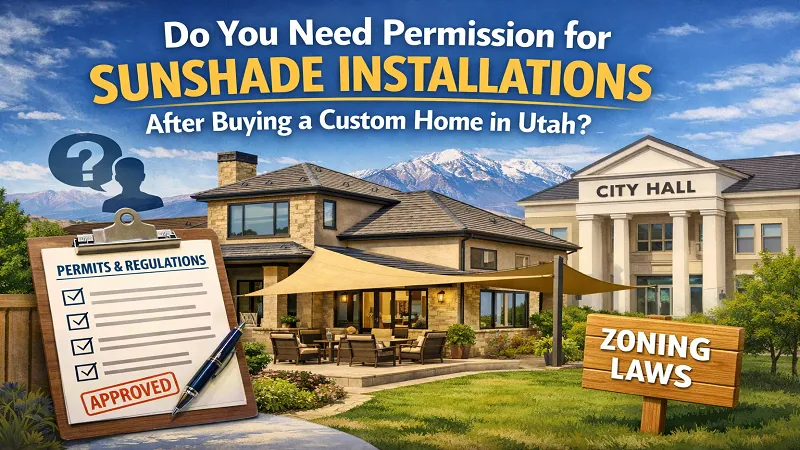
Buying a custom home in Utah gives you the freedom to design your living space exactly the way you want, both indoors and outdoors. One of the most common upgrades homeowners consider is installing a sunshade to protect patios, decks, or outdoor seating areas from intense sunlight. While sunshades can improve comfort and energy efficiency, many homeowners wonder whether permission is required before installing one. The answer depends on several factors, including local regulations, the type of sunshade, and whether your home is part of a community with additional rules.
Understanding Local Building Regulations in Utah
In Utah, building regulations are managed at the city or county level. This means permit requirements can vary depending on where your custom home is located. Generally, permits are required when a project affects the structure, safety, or electrical systems of a home. If a sunshade is considered a permanent structure or alters the home’s exterior framework, it may fall under these rules.
Simple, temporary sunshades that do not involve structural changes are often exempt from permitting. However, more permanent installations may be treated similarly to patio covers or accessory structures. Because definitions can vary, homeowners should confirm requirements with their local building department before starting any work.
When a Permit Is Typically Required
You are more likely to need permission if your sunshade installation involves any of the following:
- Permanent attachments to walls, roofs, or structural beams
- Support posts set in concrete or footings
- Motorized systems or built-in lighting, which involve electrical work
- Large overhangs that extend into setbacks or easements
In these cases, the installation is often considered a structural modification. Permits help ensure the sunshade meets safety standards, wind-load requirements, and zoning regulations, which is especially important in areas prone to strong winds or heavy snow.
Situations Where Permission May Not Be Needed
Some sunshade installations may not require formal approval, especially when they are non-permanent. Examples often include:
- Freestanding umbrellas or fabric shade sails
- Retractable awnings that are easily removable
- Temporary or seasonal shading solutions with no fixed foundations
Even in these cases, homeowners should not assume approval is unnecessary. A structure that seems temporary to a homeowner may still be classified differently under local rules.
Zoning and Property Line Considerations
Zoning laws play a major role in determining whether permission is needed. These rules control how close structures can be to property lines, how high they can be, and how far they can extend from the home. If a sunshade crosses setback boundaries or impacts neighboring properties, it may require review or adjustment.
Corner lots, hillside properties, and homes near public walkways often have stricter requirements. Failing to comply with zoning rules can lead to fines or mandatory removal, even after installation is complete.
Homeowners Association (HOA) Rules
If your custom home is located within a planned community, HOA approval may be required regardless of whether a city permit is needed. HOAs often regulate exterior modifications to maintain a consistent appearance throughout the neighborhood.
Sunshades may need to match approved colors, materials, or designs. Many associations require homeowners to submit plans for review before any installation begins. Ignoring HOA requirements can result in penalties or requests to remove the structure, so it’s essential to review your community guidelines carefully.
Why Getting Permission Matters
Skipping permits or approvals may save time initially, but it can create serious problems later. Unpermitted work can complicate home sales, cause issues during inspections, or lead to insurance complications. In some cases, homeowners may be required to dismantle non-compliant structures at their own expense.
Getting approval also provides peace of mind, knowing your installation meets safety standards and local laws.
Best Steps to Take Before Installing a Sunshade
To avoid problems, homeowners should:
- Contact their local building department to confirm permit requirements
- Review zoning regulations related to setbacks and height limits
- Check HOA rules and obtain written approval if applicable
- Work with experienced contractors who understand local regulations
- Keep documentation for future reference or resale
Final Thoughts
After buying a custom home in Utah, installing a sunshade can be a great way to enhance outdoor living. Whether you need permission depends on the type of sunshade, how it’s installed, and where your property is located. While some installations may not require approval, many permanent or structural sunshades do. Taking the time to confirm requirements before installation can save money, prevent legal issues, and ensure your outdoor upgrade is fully compliant and stress-free.